
On May 19, 2007, Élianne was celebrating her 18th birthday. She first enjoyed a barbecue dinner at home with three friends. They then planned to continue the evening at Bourbon Street, a well-known bar in the Laurentians region at the time, before she would meet up with her boyfriend later that night. Élianne never made it to her destination.
As they turned into the bar’s parking lot, their car was violently struck by a drunk driver. Élianne, who was sitting in the back seat on the side of the collision, suffered a severe traumatic brain injury. She lost consciousness immediately upon impact.
After being stabilized at the Saint-Jérôme Hospital, Élianne was transferred to the Montreal Sacré-Coeur Hospital. She spent six weeks in intensive care and another six weeks in intermediate care.
A heartbreaking moment for a mother
It was around one in the morning. Jocelyne Parent was just about to fall asleep when the doorbell rang. It wasn’t Élianne, who had once forgotten her keys and rung the doorbell late at night before. It was two police officers. Her daughter had been in an accident.
“That’s exactly the kind of news you never want to receive,” her mother recalls.
Élianne’s parents quickly gathered a few things and rushed to Sacré-Cœur Hospital.
In a trauma room, they found Élianne in a deep coma, surrounded by a large team of doctors, nurses, and other professionals ready to do everything possible to save her life. Complications followed one after another during the first few days: swelling of the brain that would not subside, a severe episode of extremely high intracranial pressure, temporary kidney failure, pneumonia, and acute respiratory distress syndrome.
Even though Élianne’s condition did not suggest a promising future, the medical team did everything they could to help her wake up.
The doctors—Dr. Bellemare, Dr. Bernard, Dr. Giasson, Dr. Verdant, and Dr. Marsolais—always took the time to answer Jocelyne’s questions and concerns.
“They allowed me to be there a lot, to stay at my daughter’s bedside. It was very human—you could feel there was a team. The staff truly cared.”
She remembers the nurses, especially Angela, who stood out for her compassion and attentiveness; the extraordinary residents who took such good care of Élianne; and the skilled doctors who rotated through shifts, each offering different perspectives that ultimately helped bring Élianne back to life.
After waking up: rehabilitation
After several weeks in a coma, Élianne woke up very slowly. Even though she remained very absent after being transferred to intermediate care, she is aware of the crucial role that Dr. Bellemare and the entire trauma team played in her survival.
“I survived thanks to the intensive care at Sacré-Cœur. I was able to regain my abilities because of the extraordinary and professional care I received.”
When she woke from the coma, she was starting from zero—“like a newborn baby,” Élianne herself says.
Seeing so many people constantly entering her hospital room to save her life and hearing the machines around her triggered a mix of emotions: fear and anger. She didn’t understand what was happening and couldn’t explain what she was perceiving. It caused a great deal of anxiety.
She had to relearn how to walk and how to speak.
The traumatic brain injury she suffered also caused visual agnosia, a condition that makes it difficult to recognize people, objects, or places. She still lives with short-term memory issues and has never regained memories from her life before the age of 18.
“In rehabilitation, we knew it would take a long time. We also knew things would never be the same again. But it was obvious that we had to keep going. We received a lot of help—even from people we didn’t know. That helped us tremendously,” Jocelyne says gratefully.
During rehabilitation, Élianne was highly motivated to recover as many of her abilities as possible. Her efforts paid off.
Today, she lives alone in her apartment. She participates in improvisational theatre and does many activities with her partner. Twice a year, she also volunteers by writing articles for Le Phœnix, the newspaper of the Quebec Association for Traumatic Brain Injury Survivors.
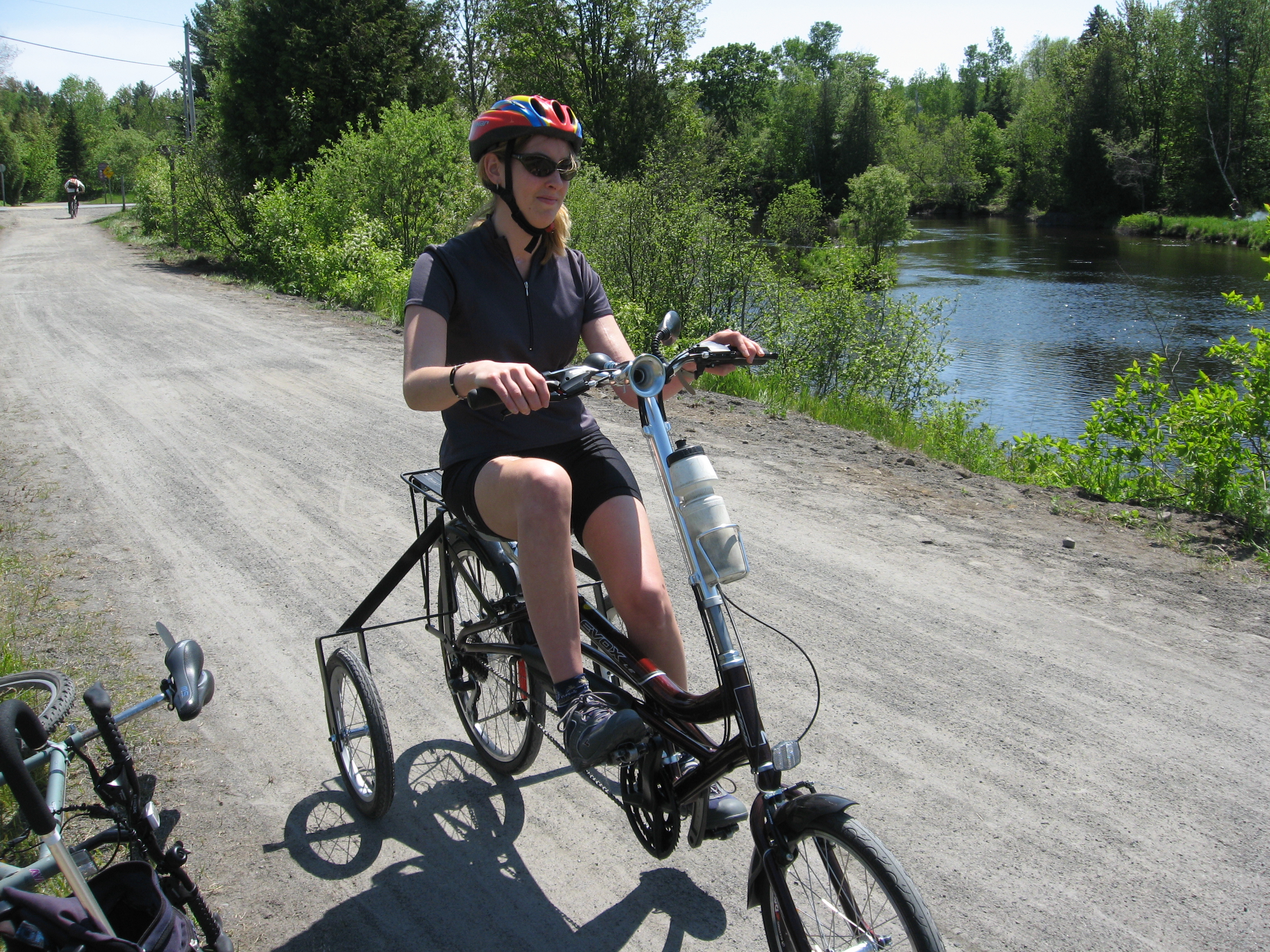
Even today, she still experiences balance and orientation problems, which prevent her from leaving home alone. She needs help with certain daily tasks, such as grocery shopping, although she can still do many things independently. Everything requires more energy and concentration, but she refuses to let that stop her. “I may not move fast—I move with a cane—but I still move forward,” Élianne says with determination. For more than 17 years, she has worked tirelessly to push beyond the limits predicted by the professionals she met over the years. Élianne fights every day to regain greater independence.
An uncertain future filled with hope and smiles
Jocelyne worries about her daughter’s future.
“I’m getting older, and Élianne needs help with many things in her daily life… After I’m gone, what will happen?” she asks with concern.
She wants to make arrangements so that Élianne’s life will be as easy as possible.
Élianne says she was saved by laughter and hope.
At the hospital, laughter—and the hope of pushing her limits a little further each day—gave her the energy to stay awake even two minutes longer to complete difficult exercises that would improve her physical and mental condition.
That’s who she is: an active woman who aims to “do better than better.”
Today, Élianne lives fully in the present moment. She does not know what the future holds, but she knows she wants to keep doing what she loves and enjoying life’s simple moments: walking down the street, breathing through her nose, making people smile, spending time with friends, caring for loved ones, and becoming more independent.
She also hopes to raise awareness about issues she understands better than anyone: the dangers of the road and the fragility of the brain—and of human life.
Losing her head? Élianne’s Challenge
Encouraged by Dr. Bellemare, Élianne decided to organize her own fundraiser to support the Foundation.
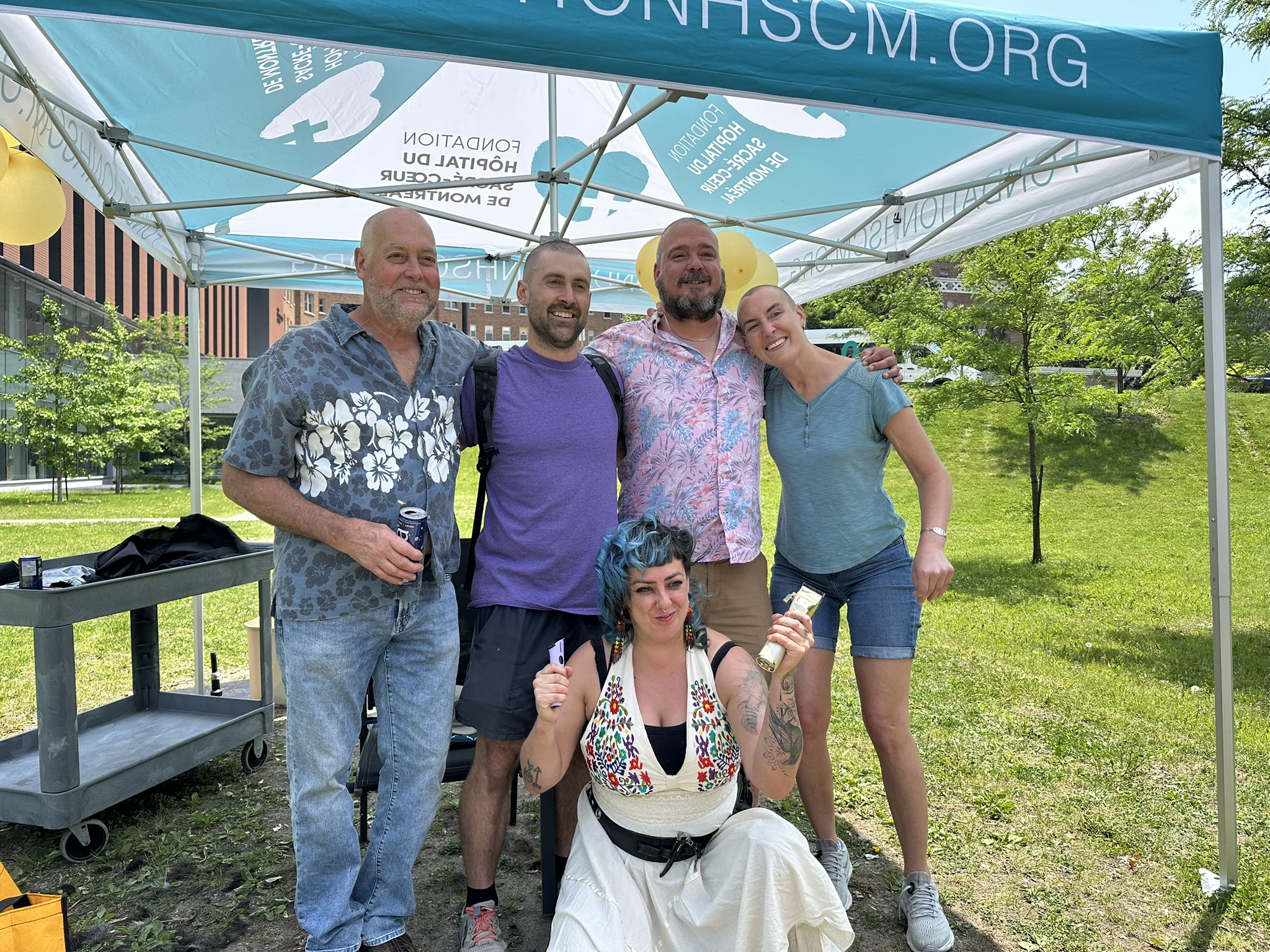
On June 11, 2025—18 years after her accident—Élianne shaved her head. It was a courageous gesture to give back to the hospital that played a crucial role in her survival and to thank the team of professionals who took such good care of her.
“This gesture isn’t big enough to express all the gratitude I have for that hospital and for everyone who works—or worked—there and who made it possible for me to speak today,” she explains.
Through this fundraiser, Élianne hopes to help finance research, healthcare projects, and equipment that will allow the professionals at Sacré-Cœur to provide high-quality care to all patients.
For Élianne, the people who pass through the walls of Sacré-Cœur Hospital deserve nothing less than the best care medicine can offer—just like the care she received there.
Élianne carries her message with love and determination, inspiring many people to rally around a mission that is dear to her heart: saving lives and making a difference for patients striving to regain a better quality of life.
Her head-shaving challenge and call for solidarity raised $8,450, an impressive amount.
Élianne is proud of the results of her initiative and of the symbolic act of shaving her head—a gesture she sees as a way of continuing her life with greater lightness.
She even convinced several people in her circle, as well as an employee from Sacré-Cœur’s archives department, to join her in shaving their heads in solidarity.
Élianne is truly an inspiration. Her strength and her determination to spread hope resonate with everyone who has the privilege of crossing her path.